
English| USD
Suggested for you
More currencies
Choose a language
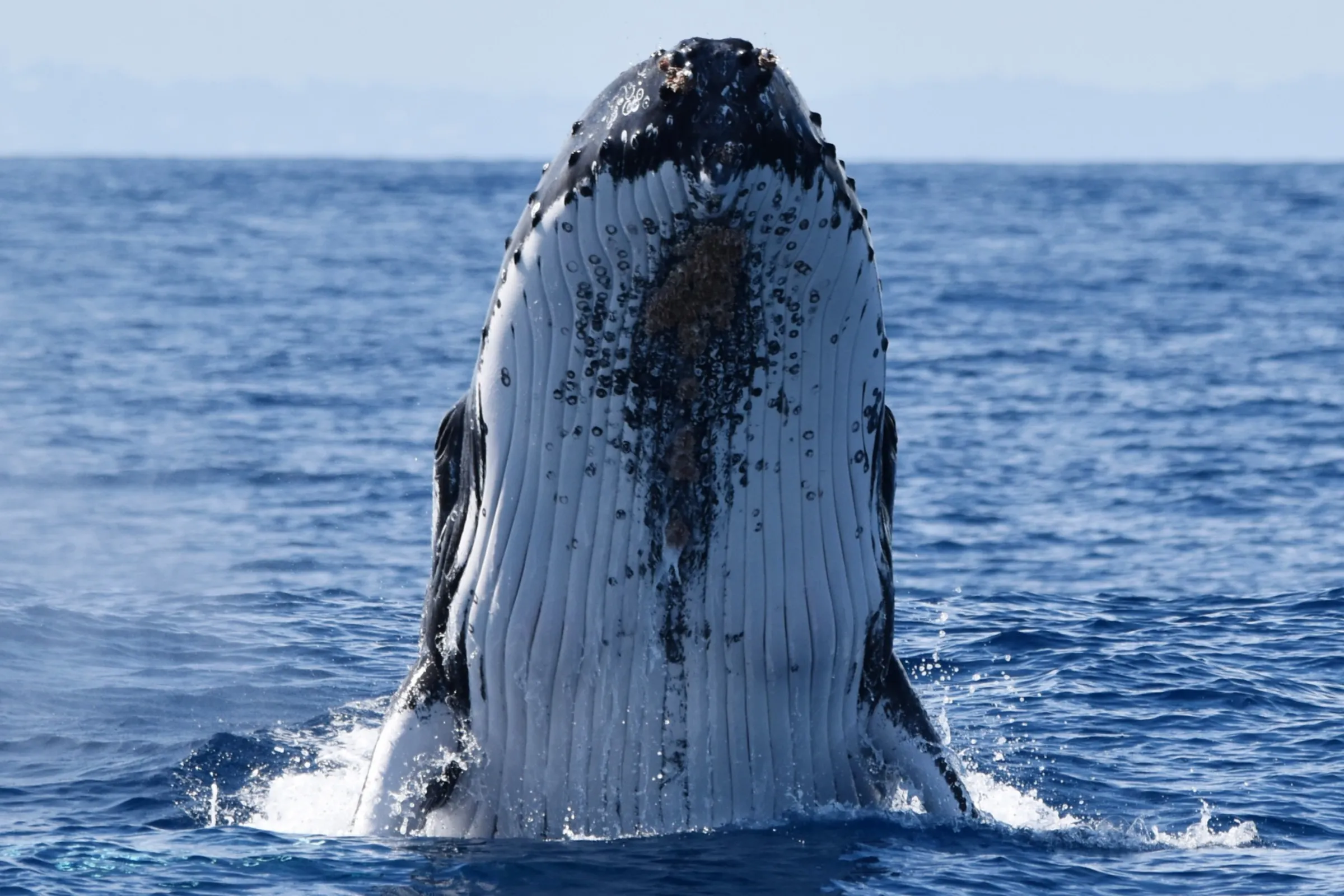
Western Australia's southwest coast becomes a migration corridor twice each year as humpback and southern right whales travel between Antarctic feeding grounds and tropical breeding waters. Busselton sits directly along this route, with Geographe Bay offering sheltered waters where whales pause, breach, and nurse calves within sight of the famous timber jetty.
Quick answer
The whale watching season in Western Australia runs from mid-May through late October, with peak sightings in Busselton occurring between June and September. Humpback whales pass northward from May to July during their migration to breeding grounds, then return southward with newborn calves from August through October. Southern right whales appear less predictably but favor Geographe Bay's calm waters during winter months, particularly July and August.
More than 35,000 humpback whales migrate along Western Australia's coast each year, making it one of the largest documented cetacean movements on Earth. The species was hunted to near-extinction by the 1960s, with fewer than 500 individuals remaining in the eastern Indian Ocean population, but strict protections have allowed numbers to recover at roughly 10 percent annually since the late 1970s. Busselton's position on the inner curve of Geographe Bay creates natural shelter from Southern Ocean swells, drawing whales that seek respite during their multi-thousand-kilometer journey. Mothers with young calves use the bay as a rest stop, staying for days rather than hours while teaching newborns to breach and slap their tails against the surface. The Busselton Jetty, extending 1.8 kilometers into the bay, offers an elevated vantage point where observers can spot blows and dorsal fins without leaving shore. Early mornings between 8:00 and 10:00 typically yield the clearest sightings, when winds are light and the ocean surface reflects less glare. Southern right whales follow a less predictable pattern but appear in Geographe Bay most winters, especially when calving. These slow-moving baleen whales stay closer to shore than humpbacks and can be identified by their stocky bodies, lack of dorsal fin, and distinctive callosities—rough white patches of skin on their heads. When conditions align, both species may be visible simultaneously during the transition months of late July and early August, when northbound stragglers overlap with the first returning mothers. Water temperature, krill abundance in Antarctic waters, and prevailing currents all influence exact arrival dates, which can shift by two to three weeks between years. Observers planning visits around the migration should target the core winter months when whale presence is most consistent, understanding that sightings are never guaranteed but statistically probable during the established season. The jetty remains accessible year-round, with the 5 AUD day pass covering entry from dawn to dusk regardless of marine activity offshore.
“More than 35,000 humpback whales migrate along Western Australia's coast each year, making it one of the largest documented cetacean movements on Earth.”
The whale watching season in Busselton primarily spans from early June to early December, when migrating species enter the protected waters of Geographe Bay. September through November is the peak period as whales congregate in the bay to rest and nurse their calves.
14°C to 18°C; cool and wet
Humpback whales begin their northern migration through the region. Sightings are consistent but less frequent than later in the season.
16°C to 22°C; mild and pleasant
This is the peak window for Southern Right, Humpback, and the occasional Blue whale. Mothers and calves often linger in the bay during this time.
—
Mid-week mornings offer quieter observation conditions. Optimal light levels facilitate spotting whales from the jetty or local charters.
Verdict: For the highest probability of sightings and favourable conditions, plan your visit for weekday mornings between September and November.
Busselton Jetty remains accessible every day of the week to accommodate whale watching logistics and visitor access. The site maintains continuous operations to ensure availability for those planning their visit.
Busselton Jetty is located at 17 Foreshore Parade, Busselton WA 6280, Australia. The site is accessible by vehicle via Bussell Highway, which connects directly to the Busselton foreshore area.
Bussell Highway (State Route 10) to Foreshore Parade
Transwa coach service to Busselton Station
Walk from Busselton town centre via Queen Street
Plan your visit during the best arrival window of 08:00–17:00 to utilize jetty services and achieve optimal light for spotting whales. Be prepared for a walk of 60 steps if accessing the jetty by foot.
Maximize your whale watching experience at the Busselton Jetty with these practical observations from experienced observers.
Wear polarized lenses to reduce glare on the water surface, making it easier to spot blows and breach splashes.
Check the local marine forecast for low wind speeds, as calm water significantly improves visibility for surface-active marine mammals.
Bring binoculars with 8x or 10x magnification, as higher power settings are often difficult to stabilize against the movement of the jetty.
Conditions at the end of the 1.8-kilometer jetty can be significantly cooler and windier than at the shoreline; bring a windproof jacket.
Scan the horizon for white water or sudden disturbances rather than focusing solely on the area immediately near the jetty pylons.
Arriving within the recommended window allows you to take advantage of low-angle sun, which highlights the contrast of whale activity against the ocean surface.
Everything you need to know about when can you see whales in western australia
In the Busselton region, the whale watching season typically runs from September to November. During this window, when can you see whales in western australia, you will find humpback whales and their calves resting in the sheltered waters of Geographe Bay.
The primary species encountered are humpback whales, though Southern Right whales also frequent the area during their migration. Occasionally, blue whales are sighted later in the season as they move through the bay. Monitoring these species helps answer when can you see whales in western australia for enthusiasts.
The Busselton Jetty is a popular location for viewing the migration, as whales often pass through the calm waters of Geographe Bay. While you may spot them from the jetty itself, many visitors choose to book specialized tours that depart from the local marina or jetty to see these animals up close. Understanding when can you see whales in western australia helps you plan your visit to this landmark.
Tours generally operate daily during the peak season to provide the best chances of sightings. It is recommended to plan your trip during the best arrival window of 08:00–17:00 to ensure you have optimal light for spotting whales and access to all jetty services.
Visitors can walk the Busselton Jetty with a Jetty Day Pass, which has an entrance fee of 5 AUD. This pass grants you access to the 1.8-kilometer structure where you can scan the horizon for whale activity. This is a cost-effective way to experience the location, especially when considering when can you see whales in western australia from the shore.
Yes, most whale watching cruises in Busselton are family-friendly and cater to children. These vessels provide a safe and comfortable environment to view the marine life, though it is always wise to check with specific tour operators regarding their age requirements for small infants.
When visiting the jetty, remember there are 60 steps for access, so comfortable footwear is advised. Bring binoculars to enhance your chances of spotting blows or breaches in the bay, and ensure you have sun protection for your time out on the water.