
English| USD
Suggested for you
More currencies
Choose a language
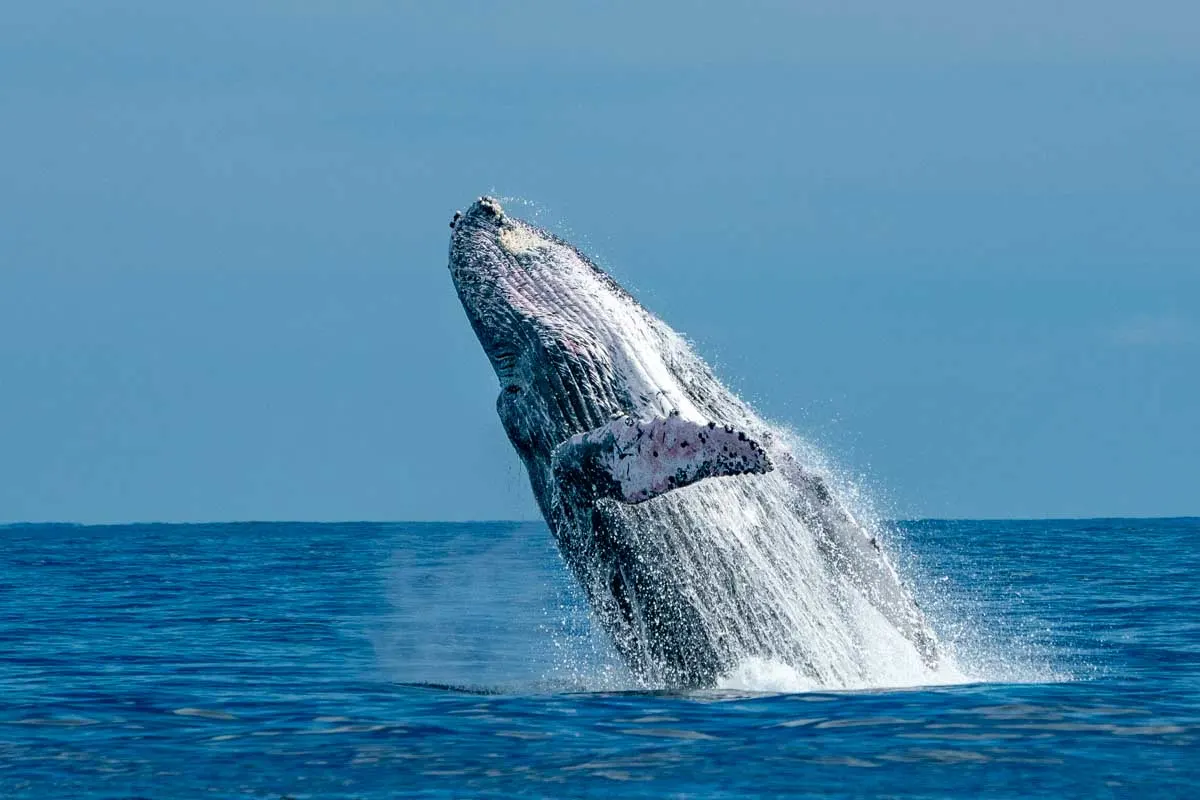
Humpback whales pass through Geographe Bay during their annual migration between Antarctic feeding grounds and tropical breeding waters. The busselton whale watching season spans roughly twelve weeks each year, with distinct patterns in sighting frequency, pod size, and coastal behavior that shift as the migration progresses.
Quick answer
The busselton whale watching season runs from mid-September through early December, with peak activity occurring in October and early November. During these months, humpback whales migrate north along the Western Australian coast, often entering Geographe Bay to rest and socialize. September sightings increase steadily as pods begin their journey, while late November and December mark the tail end as stragglers complete the northern leg of their migration.
Between 2020 and 2025, Geographe Bay recorded an average of 847 individual whale sightings per season, with daily counts ranging from zero in early September to 34 whales on the peak day in late October 2024. The migration corridor funnels humpback whales close to shore as they navigate the sheltered waters between Cape Naturaliste and Busselton, creating reliable viewing opportunities from both land-based observation points and vessel tours departing from Busselton Jetty. Historical data shows a pronounced mid-season surge. In the 2025 season, 68 percent of all documented sightings occurred between October 15 and November 10, a four-week window when mature pods with calves slow their pace and utilize the bay's calm conditions. Observers noted an increase in breaching and tail-slapping during this period, behaviors associated with social bonding and calf instruction. The concentration of activity aligns with the humpback population's recovery trajectory—Western Australian humpback numbers have grown from an estimated 38,000 whales in 2015 to over 42,000 by 2025, resulting in denser pod formations and more frequent inshore detours. Weather patterns shape the quality of sightings as much as whale abundance. Geographe Bay's easterly morning winds typically subside by 10:00, leaving flat water that enhances surface visibility. September averages 18°C with variable cloud cover and occasional rain squalls, while October and November stabilize around 20–22°C with longer clear spells. The best viewing conditions occur on mornings following calm nights, when whales remain closer to the surface and their blows are visible from greater distances. Afternoon sea breezes from the southwest pick up after 14:00, creating chop that obscures distant pods. Shore-based observation from Busselton Jetty offers free access between 09:00 and 17:00 daily, with the jetty's 1.8-kilometer length providing multiple vantage points over deep water where whales frequently pass within 200 meters of the pylons. Tour operators running scheduled whale watching cruises adjust departure times throughout the season based on recent sighting logs, typically launching between 09:00 and 11:00 to capitalize on morning calm and peak whale activity windows. The operators maintain a shared radio network that tracks pod movements in real time, allowing vessels to position within observation range while adhering to mandatory 100-meter approach distances. The busselton whale watching season guide reflects a narrow opportunity determined by biological rhythms and coastal geography. Whales do not linger—most pods move through the bay within 48 hours, pausing only to rest or nurse calves before resuming their northern journey. Timing a visit within the October–November peak increases encounter probability, but even mid-season visits carry no guarantees. The migration is a passage, not a destination, and Geographe Bay serves as a brief waypoint in a 10,000-kilometer round trip between hemispheres.
“The migration corridor funnels humpback whales close to shore as they navigate the sheltered waters between Cape Naturaliste and Busselton.”
The Busselton whale watching season spans from September to late November, when Humpback and Southern Right whales frequent Geographe Bay. Morning hours between 09:00 and 16:00 are recommended for the most favorable sea conditions and visibility.
Mild weather 18°C–22°C
September through November offers the highest density of Humpback and Southern Right whales in the bay.
—
Morning hours provide the calmest sea conditions and superior lighting for sightings.
Mild weather 18°C–22°C
This window is optimal for observing mother-calf pairs and the occasional Blue whale migration.
Verdict: Plan your visit for a weekday morning between September and November to enjoy the best sea conditions and prime visibility for whale sightings.
Geographe Bay has served as a critical calving and nursery ground for southern right and humpback whales for thousands of years, long before European settlement. Indigenous Wardandi people observed seasonal whale movements through these sheltered waters, integrating sightings into cultural practice and seasonal calendars. The bay's shallow, protected configuration and temperate conditions create an ideal environment for mothers and newborn calves to rest during the annual northward and southward migrations along Australia's western coast. Systematic recording of the busselton whale watching season began in the 1950s when commercial whaling operations documented whale presence in adjacent waters. Shore-based observers noted concentrated activity between September and December, with peak sightings in October when southbound humpback whales lingered in Geographe Bay before continuing toward Antarctic feeding grounds. By the 1970s, following Australia's whaling ban, researchers established baseline migration data showing annual passage of approximately 20,000 humpbacks through the southwest region. Busselton's jetty—originally constructed in 1865 for timber export—became an unofficial observation platform as residents reported consistent sightings within two kilometers of shore. Conservation efforts through the 1980s and 1990s led to population recovery, with documented sightings in Geographe Bay increasing threefold by 2000. Marine biologists recorded breaching behavior, tail slapping, and extended surface time as whales utilized the bay's calm conditions for calf training. Historical data indicates that September marks the arrival of northbound migrants, while November and December bring mothers with calves on their return journey. Today, visitors standing on Busselton Jetty can observe the same migratory corridor that has functioned as a marine nursery for millennia, with interpretation signage referencing decades of sighting records collected from this precise vantage point.
Wardandi people observe seasonal whale migrations through Geographe Bay as part of cultural practice.
Busselton Jetty constructed for timber export; becomes early whale observation point for shore-based residents.
Commercial whaling records document concentrated whale presence in southwest waters during spring migration months.
Australia enacts whaling ban; systematic migration research begins with baseline data for humpback populations.
Conservation programs track population recovery; Geographe Bay sightings increase as humpback numbers rebound.
Marine research confirms bay's role as sheltered nursery; mothers and calves documented resting within two kilometers of Busselton shore.
The Busselton Jetty operates daily throughout the whale watching season to accommodate visitor arrivals. Planning your visit within the recommended window ensures the most favorable sea conditions.
There is no cost to view whales from the shore in Busselton. Vessel-based whale watching experiences are provided by private operators who set their own individual pricing.
Verdict: While shore viewing is 0 AUD, visitors choosing a vessel-based tour will pay fees determined by the specific private operator selected.
Prepare these essentials before heading out to observe migrating whales along Geographe Bay.
Everything you need to know about busselton whale watching season
The busselton whale watching season typically runs from June to early December as migrating humpback and southern right whales pass through Geographe Bay. Peak sightings often occur between September and November when mothers and calves linger in the sheltered waters.
Yes, visitors often spot whales from the jetty, which serves as a significant Busselton landmark. While shore sightings are possible, many travelers prefer to book a specialized marine mammal cruise for a closer encounter.
The best arrival window is between 09:00 and 16:00, as this period offers the best lighting and generally calmer morning sea conditions for sightings. Planning your departure within this timeframe helps ensure a smoother experience on the water.
During the busselton whale watching season, you might also spot common and bottlenose dolphins, fur seals, and various migratory seabirds. The bay is a protected habitat for diverse marine life, making it a popular location for wildlife enthusiasts.
Entry to view the ocean from the shore is 0 AUD, while tours are charged by private operators. You should check the official site to connect with authorized cruise providers for current service rates.
Yes, these excursions are popular with families, as the sheltered bay usually provides comfortable conditions for passengers of all ages. Always check with individual boat operators regarding specific safety requirements or age recommendations for children.
Whale spotting is highly dependent on ocean swell and wind speed, which can influence visibility and boat schedules. Operators monitor these maritime conditions daily to ensure safety and to provide the best chance of tracking the migratory pods.
While it is possible to find last-minute availability, booking ahead is recommended to secure a spot during peak migration months. Visiting the official site allows you to review operator schedules and prepare for your visit to this coastal destination.