
English| USD
Suggested for you
More currencies
Choose a language
Geographe Bay's whale migration season brings humpback sightings within kilometres of shore, but ocean conditions shift fast once you leave the jetty. The right clothing keeps you comfortable through spray, wind gusts, and hours of deck exposure while you scan for breaches and tail slaps.
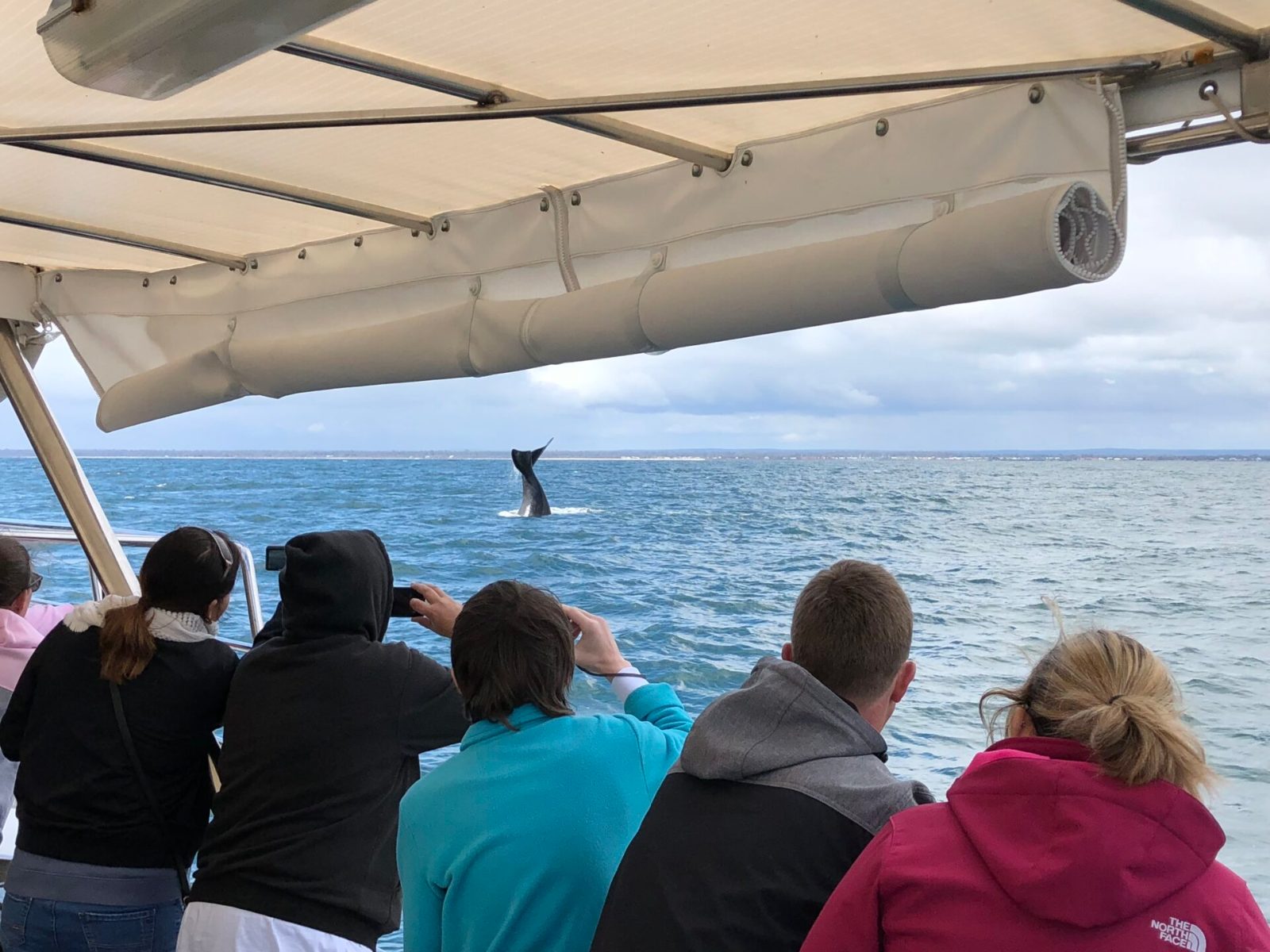
Quick answer
Dress in three layers for whale watching in Busselton: a moisture-wicking base layer, an insulating fleece or wool mid-layer, and a waterproof windproof outer shell. Ocean spray and wind chill drop the perceived temperature by 5-10 degrees Celsius even on warm days. Wear closed-toe non-slip shoes, polarised sunglasses to cut water glare, and a wide-brim hat secured with a chin strap.
The Southern Ocean current that funnels humpback whales past Busselton Jetty between September and December also delivers unpredictable wind shifts and intermittent spray across boat decks. Tours departing from the jetty at 17 Foreshore Parade operate within a coastal microclimate where morning calm can turn to afternoon chop in under an hour. A 5 AUD jetty walk pass grants access to the departure point, but the real preparation happens before you board. Layering solves the twin challenges of warmth and adaptability. Start with synthetic or merino wool base layers that wick moisture away from skin when you move between sun-exposed upper decks and shaded cabin areas. A fleece or insulated jacket provides core warmth without bulk, allowing free arm movement when you raise binoculars or cameras to track a surfacing pod. The outer shell must block wind and repel ocean spray—cotton hoodies and denim jackets soak through and stay cold. Footwear determines your stability on wet fibreglass decks. Closed-toe shoes with deep rubber treads grip better than sandals or smooth-sole sneakers when the boat pivots to follow a whale's trajectory. Polarised sunglasses eliminate the white glare off Geographe Bay's surface, revealing the dark shapes of whales just beneath the waterline before they breach. A hat with a chin strap stays secured during sudden movements to the rail. Sunscreen rated SPF 50 or higher counters the UV reflection off water, which intensifies burn risk even on overcast days. Whale watching clothing in Busselton prioritises function over style. Tours run daily from 09:30 to 16:15 during peak season, and conditions change faster than you can return to shore. Packing extra layers in a small waterproof bag gives you options if the forecast shifts or the boat extends its route to track a cooperative group of humpbacks. The ocean sets the dress code, not the departure dock.
“Ocean spray and wind chill drop the perceived temperature by 5-10 degrees Celsius even on warm days.”
Prepare for changing conditions on the water with layered clothing and sun protection.
The optimal window for whale watching in Busselton occurs between September and November when humpback whales migrate through Geographe Bay. Planning your visit for early morning hours minimizes wind exposure and provides clearer ocean conditions for sightings.
Mild temperatures 15°C–22°C
This period aligns with peak migration activity and stable sea conditions. Mornings typically offer the calmest water for spotting marine life
—
Visiting mid-week avoids weekend congestion and provides more space on the jetty. Earlier departures often benefit from lower wind speeds before the sea breeze settles in.
Verdict: The best time to visit is during weekday mornings between September and November to take advantage of optimal weather and peak migration activity.
Busselton Jetty is open daily to facilitate your whale watching departure. Access is available consistently throughout the week.
Everything you need to know about what do you wear to whale watching
When considering what do you wear to whale watching, prioritize layered clothing to adapt to changing ocean temperatures. A windproof jacket is highly recommended, as sea breezes can be quite cool even on sunny days.
Marine tours often experience lower temperatures than on land, so dressing in warm, wind-resistant layers is essential. Even during mild afternoons, the open water environment requires more protection than the Busselton foreshore.
Since coastal weather can fluctuate, bringing extra layers for your Busselton Jetty excursion allows you to adjust your comfort level easily. A thermal base layer or a light sweater is useful to have in your bag.
If you are wondering what do you wear to whale watching during windy conditions, a hooded windbreaker is your best defense against spray and chill. Protect your ears and head to maintain body heat while observing marine life.
Comfortable, flat-soled shoes with good grip are advised for navigating the jetty structure and moving around the boat. Avoid heels or open-toe footwear to ensure stability on the vessel deck.
When planning what do you wear to whale watching with kids, apply the same layering principles and ensure they have hats and scarves. Keeping children warm and dry will help them enjoy the sighting experience for the entire duration.
A frequent mistake is underestimating the wind chill factor while out at sea. Visitors often dress for the beach temperature, not realizing that the boat movement creates a consistent breeze.
To stay comfortable, choose breathable fabrics that can handle minor sea spray. Dressing in multiple layers ensures you remain at a stable temperature from the moment you access the jetty until your return.